October 2026
How We Ethically Source Bones for Our Art
Nothing is killed for our work.
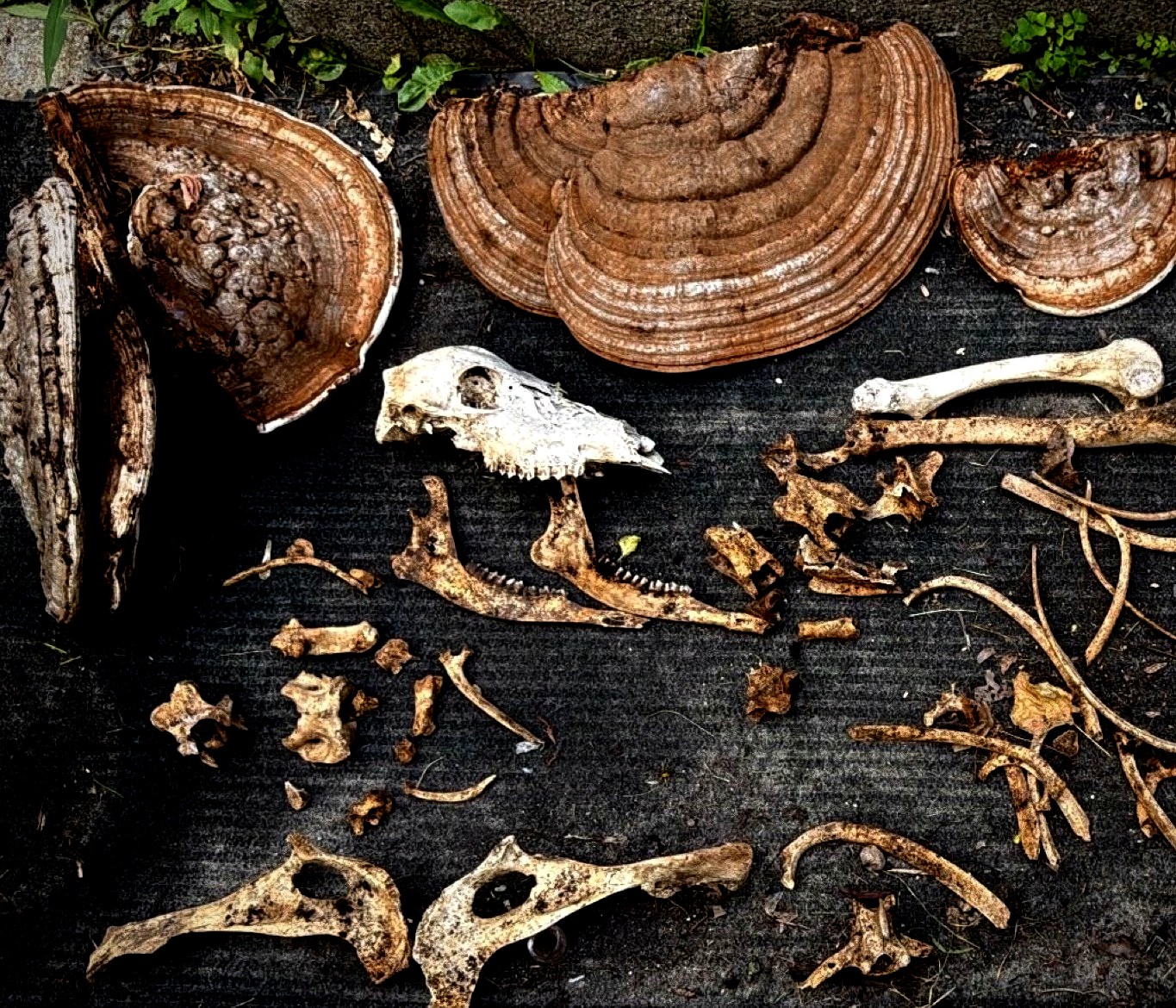
Most of our days begin in the Minnesota woods. We wander with the crows, follow the feathers they leave behind, and often find a bone waiting quietly at the end of the trail. It feels a little like being led.
We take only what the forest offers that day, never forcing, digging or disturbing, and never anything protected. Some pieces come from roadkill, lives cut short that we give a second purpose instead of letting them be forgotten.
By the end of the day our bikes are bundled with branches, flowers and fallen wood, and our backpacks hold the quieter treasures. Everything comes home to our workshop with care.
People often ask us where our bones come from. It's an important question. If you're searching for ethical bone art, you deserve a clear answer before you bring a piece home. Here is ours.
What "ethical bone art" means to us
For us, ethical starts with one simple rule: nothing is killed for our work. Not ever. Every bone we use comes from an animal whose life ended for reasons that had nothing to do with us or our art.
We see our work as a second life. An antler, a skull, or a small vertebra that would otherwise be lost to the soil or thrown away becomes something kept, looked at, and cared for. Gathered from the wild, crafted with intention.
Where ethical bones come from
Our bones come from a few honest places:
- Natural passing. Remains of animals that died on their own, out in the woods and fields.
- What others would discard. Hunters, farmers, and taxidermists often have bones they have no use for. We would rather honor them than see them wasted.
- Donations. Naturalists and families sometimes reach out with remains they'd like to see given a meaningful second life.
We pair these bones with other quiet, overlooked things: fallen wood, preserved botanicals, metal, and found objects that caught our eye on a walk.
What we will never use
Some lines don't move. We do not use, buy, or accept:
- Anything from a protected or endangered species
- Migratory bird parts or feathers, which are regulated in the United States
- Anything taken from a living animal
- Any animal killed for the purpose of making art
If we aren't sure where something came from or whether it's allowed, we leave it be. A piece is never worth cutting that corner.
Cleaning and care
Every bone is cleaned and prepared before it becomes part of a piece. It's slow, quiet work, and it's part of how we show respect for the animal the bone came from.
Why it matters to us
Bone art can look dark at first glance. To us, it's something gentler: a way of paying attention to what's left behind. A deer's antler, a small skull, a curl of fallen birch bark. Each one has a story, and each one deserves care. There's beauty in what survives.
If you ever have a question about a specific piece and where its parts came from, please ask. We're always glad to tell you.
Browse our one-of-a-kind pieces in the Curio & Crow shop. Each one is made by hand in our small workshop in Saint Paul, Minnesota.
Further reading
- Giving something strange
- Keeping a piece through winter
- Why there are no restocks
- Woodland Relics and Gothic Bone Art: A Guide to Curious Objects for Your Home
- How a piece is prepared
- Working with fallen wood
- When a piece comes home
- The Artifact Record
- Ethically Gathered · Crafted with Intention
- Sitting with the Wayfinder
- Notes from the autumn table
- All letters