Nov 16, 2026
Before the snow comes
What the bare November woods give up, and why we go looking now.
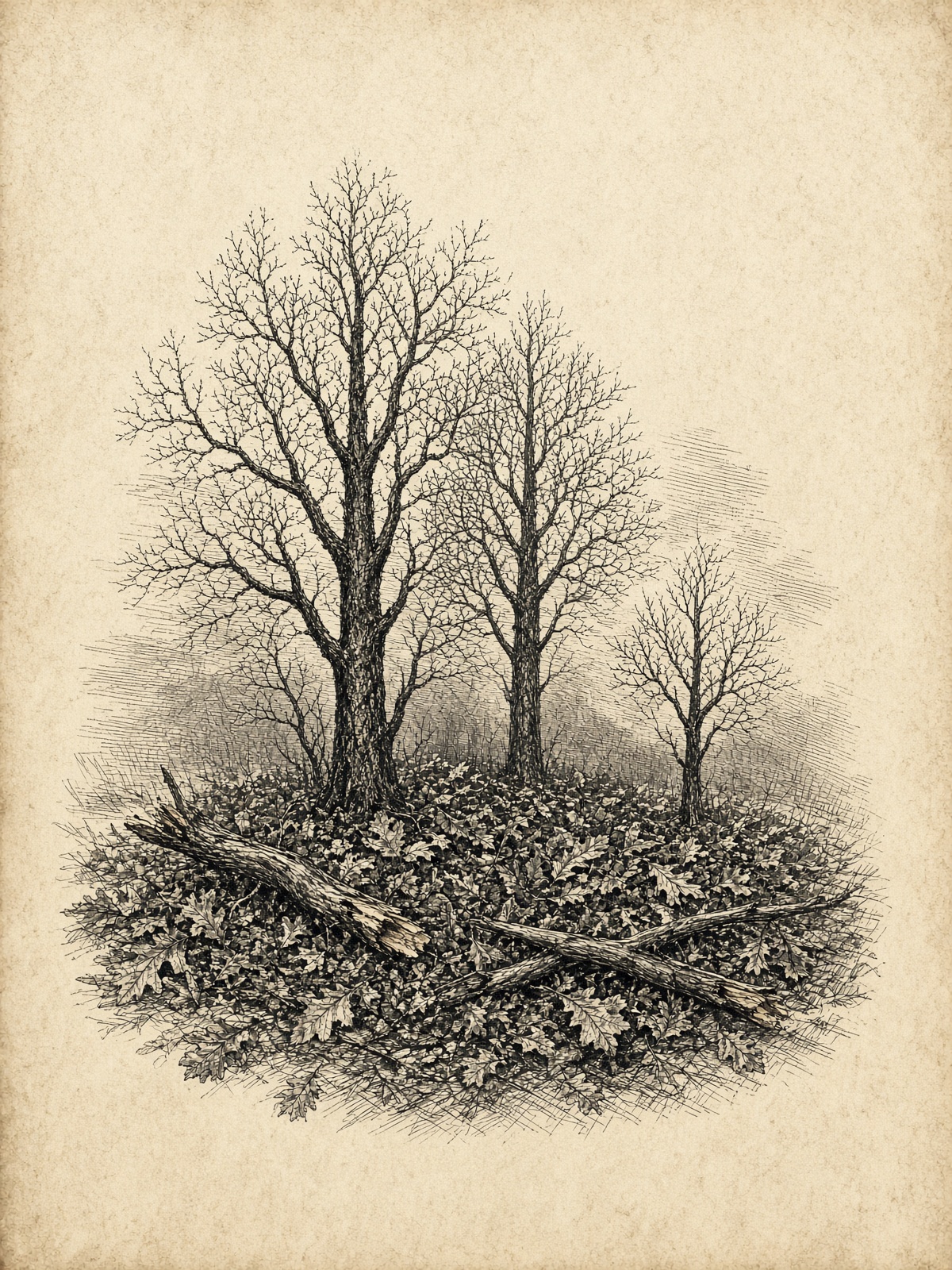
There is a short stretch every year, after the leaves come down and before the first real snow, when the northern woods are easiest to read. The underbrush has thinned. The ground is open. Things that were hidden all summer under green are suddenly in plain sight.
This is one of our favorite times to walk.
Autumn wind does a lot of quiet work. Branches that hung on all year finally let go, and they settle into the leaf litter where we can see them. When the canopy is bare, you can follow the shape of a fallen limb back to the tree it came from. You can tell what has been lying there for seasons and what came down last week. That matters to us, because we only take what the woods have already let go of. No tree is ever cut down for our work.
Walking in November is mostly looking. We leave far more than we carry home. Some pieces are too far gone. Some are already home to something else. Some just aren't ready, and the woods can keep them a while longer. Whatever does come back with us goes into the workshop to rest and dry through the cold months. Winter is when the slow part happens.
There is also a little urgency in it. Once the snow settles, the forest floor closes up again until spring. What we find in these few weeks often shapes the work at the table well into the new year.
So if a piece of ours carries the grain of an old branch or the weathering of a long season outdoors, there is a good chance it started on a grey afternoon like this, with the light going early and the ground about to go quiet.
Gathered from the wild, crafted with intention.
There's beauty in what survives.
Further reading
- The marks a piece keeps
- Giving something strange
- Keeping a piece through winter
- Why there are no restocks
- Woodland Relics and Gothic Bone Art: A Guide to Curious Objects for Your Home
- How We Ethically Source Bones for Our Art
- How a piece is prepared
- Working with fallen wood
- When a piece comes home
- The Artifact Record
- Ethically Gathered · Crafted with Intention
- Sitting with the Wayfinder
- Notes from the autumn table
- All letters